
FREQUENTLY ASKEDQUESTIONS
Get theFacts
Understanding the realities of the greyhound racing industry is the first step toward ending it. Here we address common questions with evidence-led answers.
WHY IS THERE NO ALTERNATIVE TO ENDING DOG RACING
For decades, the greyhound racing industry has promised that welfare reforms will solve its problems. Yet injuries, deaths, overbreeding and concerns about the fate of dogs leaving racing continue to be reported year after year. We believe that these are not isolated failures but consequences of a system that relies on breeding dogs for gambling and racing. Recent decisions in Wales and Scotland to move towards ending greyhound racing reflect growing recognition that regulation alone has failed to protect greyhounds adequately.
WHY IS GREYHOUND RACING CONSIDERED CRUEL?
Greyhound racing puts dogs at risk throughout their lives, from breeding to retirement. Dogs are bred for a commercial industry where not every animal is wanted, resulting in surplus greyhounds and ongoing concerns about the fate of those who do not make the grade. Those who race face the risk of injury and death on the track, while many spend much of their lives in kennels and are treated as commodities whose value depends on their performance. These harms are not accidental but inherent to a system that breeds, exploits and discards animals for gambling and entertainment.
DON'T GREYHOUNDS LOVE TO RUN?
Greyhounds are athletic dogs and many enjoy running. However, enjoying exercise is not the same as choosing to participate in commercial racing. Greyhounds happily run in parks and secure exercise areas without being raced on oval tracks, transported between kennels and tracks, or subjected to the pressures of the betting industry. The question is not whether greyhounds like running, but whether it is ethical to breed and use them for a system that continues to result in injuries and deaths.
WHY CAN'T RACING BE MADE SAFER?
Regulation has not eliminated injuries, deaths or concerns about greyhound welfare. Regulation can only manage the risks associated with racing, not remove them entirely. For this reason, we believe that only ending commercial dog racing will fully protect greyhounds from harm.
IS THE INDUSTRY REGULATED?
Yes, greyhound racing is regulated, but much of that regulation is carried out by the Greyhound Board of Great Britain (GBGB), the industry's own governing body. While licensed tracks must comply with legal requirements, including inspections, licensing conditions and veterinary attendance under the Welfare of Racing Greyhounds Regulations, the GBGB is responsible for setting the rules of racing, licensing participants, monitoring welfare standards and reporting injury and death statistics. This is a flawed system of self-regulation, as an organisation whose purpose is to govern and promote greyhound racing cannot provide truly independent oversight of the industry.
WHAT IS THE COALITION CALLING FOR?
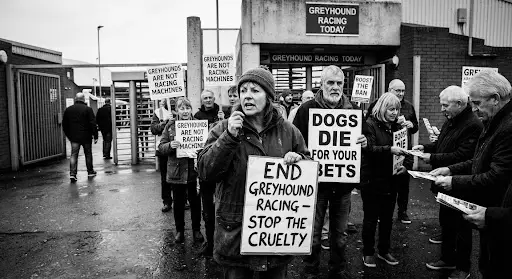
Greyhound Freedom UK is calling for legislation to end greyhound racing and ensure there is a managed transition that protects every dog currently in the industry. This includes ending the breeding of dogs for racing, ensuring robust rehoming support, and creating a future in which greyhounds are valued as companions rather than gambling commodities.
WHY IS GREYHOUND RACING INHERENTLY DANGEROUS?
Greyhounds race at high speeds around tight bends, often in close proximity to other dogs. This creates unavoidable risks of collisions, falls and serious injury. No amount of regulation can remove the fundamental dangers built into the sport itself, which is why we collectively advocate for a complete ban rather than further reform.
HAS ANYWHERE BANNED GREYHOUND RACING?
Yes. Greyhound racing has already been prohibited in numerous countries, states and jurisdictions around the world. Within the UK, both Wales and Scotland have taken significant legislative steps towards ending the sport, citing concerns about animal welfare. It is time for England to follow their lead.
IS GREYHOUND RACING LOSING PUBLIC SUPPORT?
Yes. Greyhound racing has experienced a significant decline in attendance and track numbers over recent decades. Many tracks now rely heavily on off-course betting and livestreamed races rather than spectators attending in person. At the same time, public concern about dogs used for racing has increased, and politicians across the UK are giving greater consideration to calls for a ban.
IF GREYHOUND RACING IS BANNED, WHAT WILL HAPPEN TO THE DOGS?
A responsible, phased transition can ensure that greyhounds currently in the industry are cared for and rehomed. Animal welfare organisations across Britain already rehome thousands of greyhounds every year. We support plans that protect existing dogs while preventing future breeding for racing. The aim is not to abandon greyhounds but to end the cycle that continually produces dogs for the industry. It is also important that this area is adequately funded, so the dogs can find loving homes, and rescue organisations do not become overwhelmed.
Join us
Coming soon ...How to get involved